From protein design tools to shared ideas:
European Rosetta Workshop 2026
What can happen when researchers with different backgrounds take on a protein design challenge together? At this year’s European Rosetta Workshop participants explored that question hands-on, bringing computational tools, fresh perspectives and collaborative problem-solving to the table.
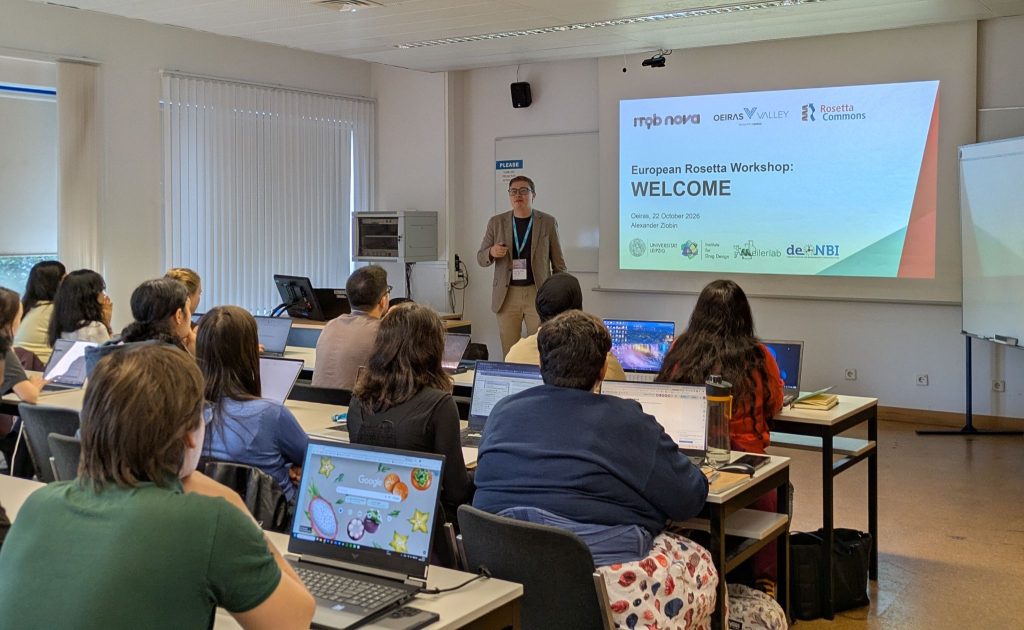
Organised by the Meiler Lab as a satellite event to the European RosettaCon, the hackathon-style format workshop introduced participants to computational protein design tools including Rosetta, RFdiffusion and ProteinMPNN. With these tools, participants explored applications such as enzyme binding, binder development and vaccine-related protein engineering.
For João Catarino, 1st year PhD student at ITQB NOVA and part of the organisating team, one highlight was watching participants connect their research interests in a shared project: “I really enjoyed seeing the students collaborate to find common ground across their research areas and build a joint project that still integrates everyone.” João was also struck by how quickly the workshop could respond to new developments in protein design: “It was also incredible to see how quickly the workshop adapted to integrate the latest protein design tools, even if they had just been released, like RFD4-Proteina and BindCraft 2.”
Bringing together people with different expertise helped make that collaboration possible. “Seeing such a diverse group work together really helped bring out everyone’s unique strengths. The varied backgrounds naturally highlighted each person’s distinct expertise as their joint projects were developed,” João mentioned.
Tools to take back to the lab
For Gonçalo Ferreira, who was also part of the organising committee, the hands-on sessions offered a chance to explore tools with immediate relevance to his research plans. He is preparing to work on biologics against influenza, including approaches involving nanobodies. “My favourite part was definitely the hands-on sessions, where we had the opportunity to explore and work with different computational protein design tools, including RFdiffusion and BoltzGen. It was particularly exciting to see how these tools can be applied to real research challenges and to discover new approaches that I could potentially use in my own work,” Gonçalo mentioned.
The sessions on binder and antibody design were especially timely for Gonçalo: “As I’m about to start my research on developing biologics against influenza, this workshop came at a particularly good time. It helped me discover the wide range of computational tools available for protein design, better understand their different applications, and see how they can complement each other throughout the design process. Since one of the approaches I’ll be exploring involves nanobodies, the sessions on binder and antibody design were especially relevant. Overall, I feel I’ve gained valuable practical skills, new ideas, and a broader perspective that will be very useful as I begin my research.”
"As I'm about to start my research on developing biologics against influenza, this workshop came at a particularly good time. It helped me discover the wide range of computational tools available for protein design, better understand their different applications, and see how they can complement each other throughout the design process."
Learning from different perspectives
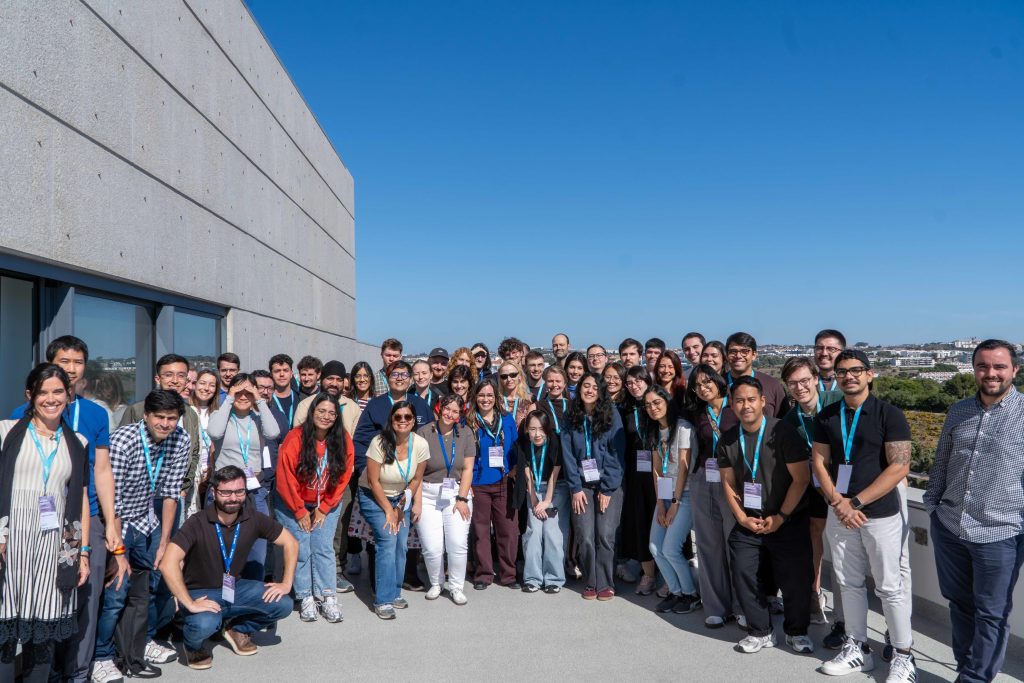
The workshop’s collaborative atmosphere also shaped how participants learned from one another. Gonçalo valued the chance to compare approaches, ask questions and hear suggestions from instructors: “What stood out to me was the opportunity to exchange ideas with people from different scientific backgrounds and levels of experience. Seeing how others approached the same challenges from different perspectives was really valuable. The tutors and instructors were also very approachable and shared useful insights and suggestions that gave me new ideas for my own research. Overall, the collaborative environment made it easier to learn, ask questions, and explore new approaches.”